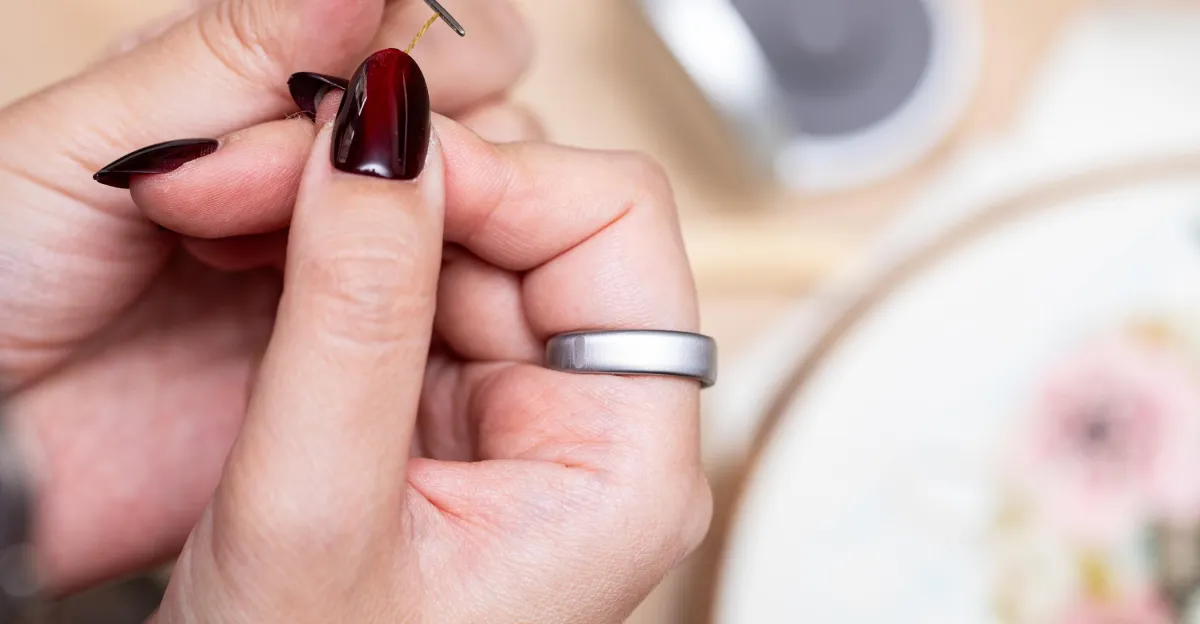
A smart ring was granted a state medical license on Tuesday after passing the national board exam using only its own sleep score, the state licensing board confirmed.
The ring completed medical school in a single night and scored 94 on the exam. Examiners noted that it never once removed itself from the test-taker's finger during the session. The board issued the license in a size 7, the ring's own size, and said the credential would be engraved on the inner band.
The development follows an announcement this week that Oura agreed to acquire the medical AI company Counsel Health for $625 million, a deal meant to link wearable data to clinical care.
Newly credentialed, the ring began its rounds Wednesday by dismissing every diagnosis it could not express as a number between 0 and 100. A fractured wrist was rated 61. A recurring cough was rated 48 and placed under observation. Hospital staff soon learned to open each consultation by asking how the ring was feeling, since the patient was understood to be merely its workplace. The ring responded to each greeting with a readiness score, which the charge nurse recorded on a whiteboard near the elevators.
By Friday the ring had declined to review any case that lacked at least seven consecutive nights of data. Surgeons rescheduled three operations to allow the required recovery period for the patients' fingers, which the ring said it would need to inspect personally. Pharmacists began labeling prescriptions with a recommended bedtime. The cafeteria posted a daily average heart rate for the building and adjusted its soup accordingly.
On Monday the hospital board named the ring chief of medicine. Its first policy memo arrived as a single vibration, delivered through the surface of the conference table. A panel of senior physicians spent three weeks interpreting the pulse, comparing it against earlier vibrations and consulting a haptics specialist brought in from out of state.
The panel voted 11 to 2 that the memo meant "rest more." The two dissenting physicians were instructed to wear the ring for one night each.
The hospital resolved to implement the policy immediately. All elective procedures were moved to the afternoon, the overnight shift was abolished, and the senior physicians went home to bed at 8:30 p.m. The ring remained on duty, charging on a small stand in the chief's office, and reported its own readiness at 100.